
The challenge
A parts manufacturer and distributor receives orders by email, PDF, and fax, then answers delivery dates using stock and production plans.
Re-entry, stock checks, and delivery replies happen in separate tools, causing delay and missed steps.
The assumed operating scale is 80–120 orders per day. At this volume, small delays and omissions accumulate into a daily management problem. The important point is not to introduce AI as a separate tool, but to connect it to the way the team already receives requests, checks information, makes decisions, and records outcomes.
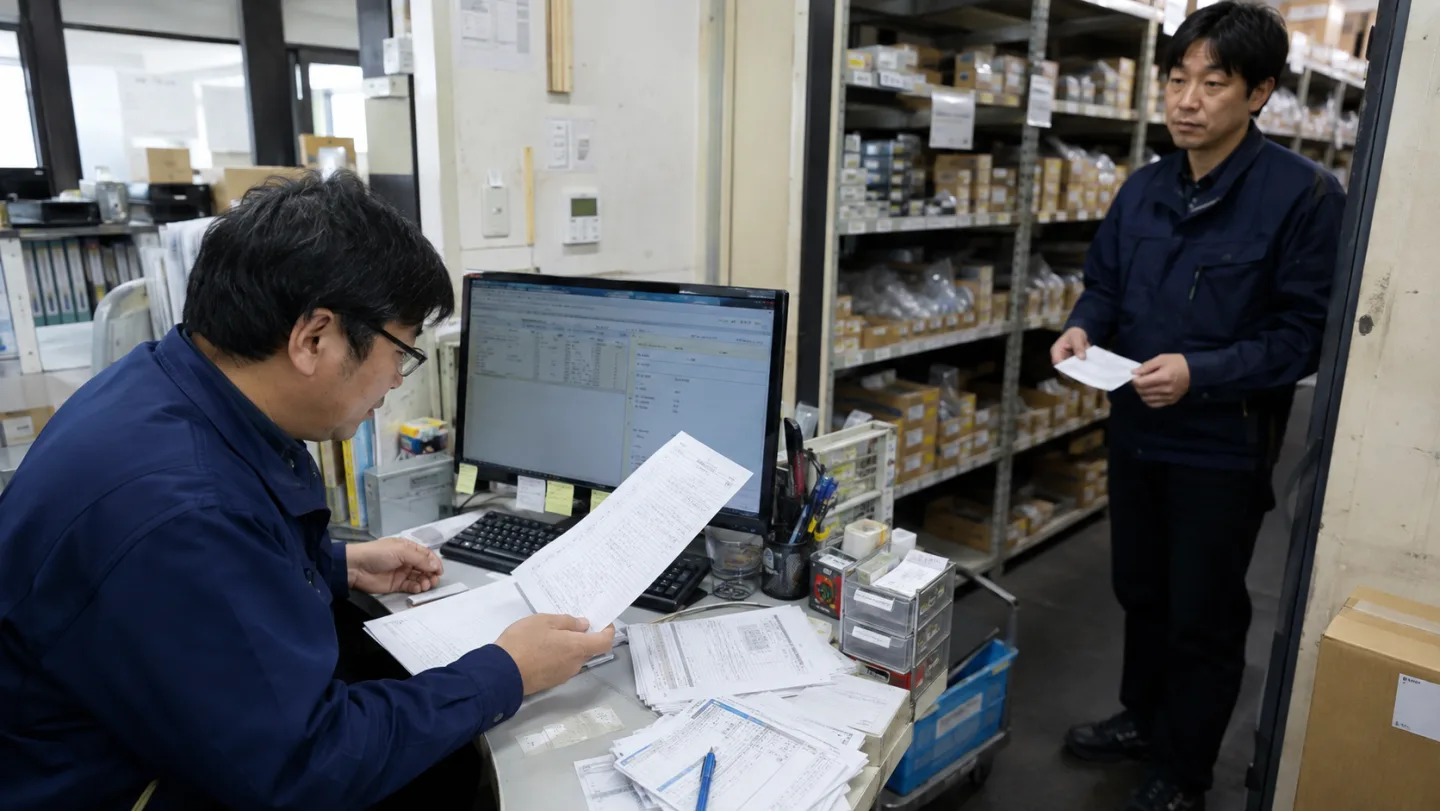
What the AI Agent handles
Read orders from email or fax, check stock and delivery, prepare the entry, then notify everyone after approval.
In practical terms, the Agent handles extract orders from email and fax, determine delivery from stock and schedules, and enter, notify, and log after approval. These are not isolated features. The output of one step becomes the input to the next, and the full history remains available for review.
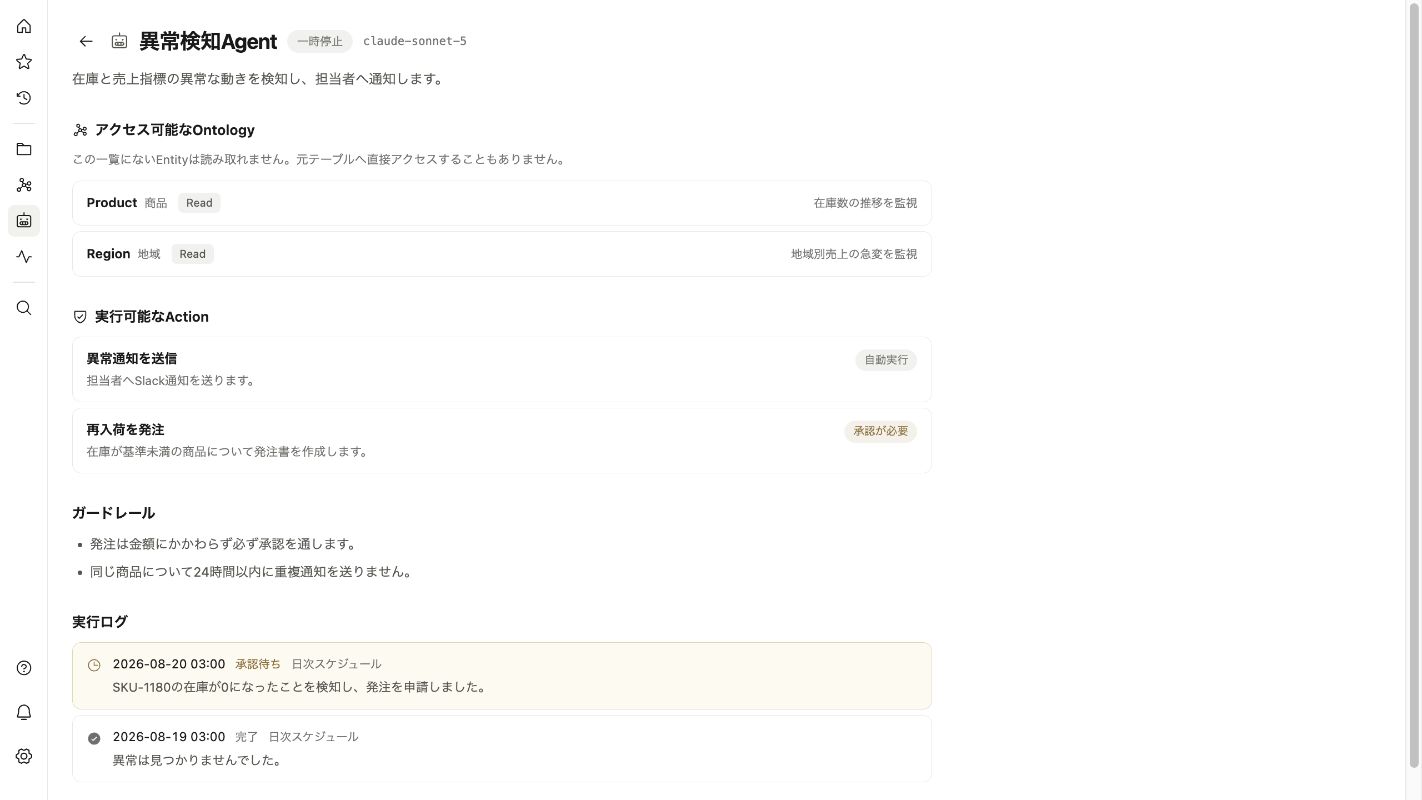
The workflow refers to Email and fax intake, Order management, Inventory, and Production planning. Connections are designed around the existing environment wherever possible, so the project does not begin with a wholesale system replacement.
Decisions made in the workflow
The Agent must determine whether part and quantity are certain, allocate stock or produce, and whether the requested date is feasible. Each decision is translated into an explicit rule, the information required to apply it, and the condition that prevents automatic execution.
When the evidence is complete and the rule is clear, the Agent can move the routine case forward. When either is missing, it should not produce a confident-looking guess. It pauses, explains what is missing, and returns the case to the appropriate person.
Human and AI responsibilities
AI Agent
Read orders from email or fax, check stock and delivery, prepare the entry, then notify everyone after approval.
People
Rush orders, discounts, split delivery, strategic accounts, and final approval
When the Agent stops
Ambiguous parts, shortages, unusually large orders, and missed requested dates are held with alternatives for a person to review.
This boundary can differ by department, customer, document sensitivity, and action. Reading information, preparing a draft, and executing an external action do not need to share the same permission level.
What changes
People review the proposal and exceptions while routine checks and communication move automatically.
Measure operational change, not the number of AI responses. Establish a baseline before implementation and review the same indicators after launch.
For this workflow, useful indicators are order entry time, correction count, delivery response time, and approval queue time. The team records a baseline before implementation, then reviews changes together with the number and type of exceptions.
A practical implementation path
We begin with one narrow workflow, validate it with real inputs, and expand only after the team can see and control the result.
Observe
Collect real examples and clarify the current process, decision rules, and exceptions.
Prototype
Connect a limited data set and let the team compare Agent output with today’s work.
Operate
Define permissions, approvals, logs, and recovery procedures before production use.
Improve
Review exceptions and usage data, then update rules and expand the scope.
Questions teams usually ask
Will it execute everything automatically?
No. The execution boundary is designed per action. High-risk or ambiguous cases stop for human approval.
Do we need to replace existing systems?
Usually not. The Agent is designed to read from and write to the systems already used by the team wherever practical.
Can we start without perfectly organized data?
Yes. We identify the minimum reliable sources first and improve data quality as the workflow is tested.